Let’s Talk Websites
I have a few clients who ask me if, in this day and age of Substack, Reels, and other social media, their business even needs a website. Honestly, I have to take a beat before I reply, because I’m English and I don’t like to appear pushy and I do, after all… build websites.
But I want to shout YES! Yes, your business absolutely needs a website. And here’s why:
Platforms like Instagram and LinkedIn are incredibly powerful. It’s true that you can build a really strong presence on social media, with large numbers of followers, and you can also sell through your social media shop or store and make money. It can help people discover you, and it can give you a voice. But it’s also kind of… unpredictable. How many times does the algorithm change? How often does your reach suddenly fluctuate, and you find that what was working last month isn’t working anymore?
With social media, you have no real control. With a website, you do. Think of it like renting a space versus owning one. With a website you can rip the carpet out and sand the floors (OK, my analogy may be getting a bit clouded by my own personal circumstances right now!).
But the point is, your website is a place that is entirely yours. No algorithms or shifting rules. It’s where you get to show clearly who you are and what you do, with full control.
About your website
Your website doesn't need to be complicated. Actually, simplicity and clarity are key, because a website’s main jobs are to:
1 - Help people understand what you do
2 - Make people feel they’ve come to the right place
3 - Give people a clear next step
At its core, it’s that simple.
Given those are your website’s jobs, what are the features you need in order for it to do that work?
A clear “what you do”
You need a clear message “above the fold” letting visitors know what you do. Attention spans are short, so within about 3–5 seconds a visitor should be able to see what you do, who it’s for, and whether they’re in the right place.
One clear next step.
Once someone has visited your site and worked out what you do, they need a clear next step. What does that look like? Basically, a big button saying something like “Book a call”, “Get in touch”, or even less subtle, “Start here”.
Simple navigation
Once you’ve hooked them in (using your big button), they need to be able to navigate around your site easily. So stick to a perfectly boring (in a good way) main navigation with words they know and understand: “Home”, “About”, “Services”, “Contact”.
A clear services page
Speaking of services - once people are in and curious, you do need a page that lays out in a bit more detail what you actually do and how you can help them. This page is where many conversions happen - or rather, where people go from being mildly curious to realising that maybe you have something they need and they should reach out.
Top tip: make it easy for them to reach out from this page with another one of those big, obvious buttons!
Proof
Your website should also provide proof - proof that you are who you say you are, and that you can do the work. Case studies and testimonials take someone from feeling unsure to feeling more confident that you’re the right person to talk to.
An easy way to get in touch
And last but not least, people need a way through your website to contact you. Something that feels easy and straightforward and not off-putting (so avoid long, complicated forms).
So does this mean there’s no place for social media?
Absolutely not.
You can have the best website imaginable - fully functioning, easy to navigate, leading people in the right direction - but, to stretch that analogy a little further, if you have a beautiful house in the middle of the countryside with no one around… no one’s going to see it.
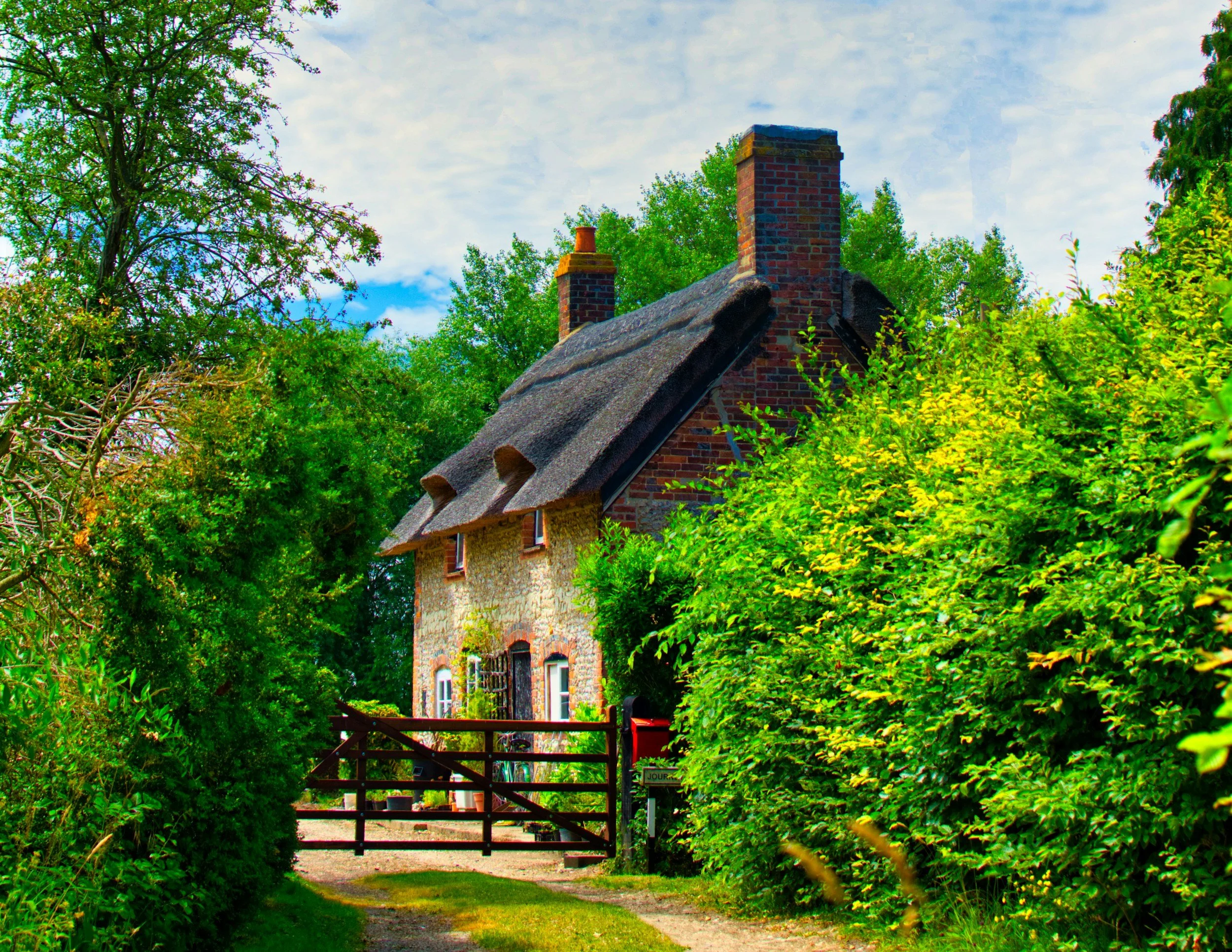
Don’t let your site be like a beautiful house in the country - that no one knows exists!
Social media’s role is to drive people to your site. Podcasts, Substack, blog posts, Instagram reels - all those should be directing people back to your website, so they can find out who you really are and what you can really offer.
One final thought
People often think of a website as a one-and-done project - something you pay for, have built, and then just direct people to for the next ten years. But things change, your business evolves, and your website needs to as well.
New case studies, changing tech, people leaving your company or new joiners - all of this matters. Going back to the point about proof and trust, people are far more likely to trust your website and want to engage with you if your content is current.
So don’t just think about a website as a static thing, think of it as a living, breathing part of your business and your wider marketing strategy.
Ultimately, it’s not about choosing between social media or a website, because the truth is you need both, and you need them to work together. One helps people find you, the other helps them understand you, on your terms. When those two things connect, that’s when your marketing really starts to pay off.